
Penn Township Previous Residents by Era
Previous residents research is a backward trail, not a single lookup. Start with the current parcel and a current recorded instrument, then move to the closest earlier document. County deeds offer a long online path, while the Pennsylvania Room, historical collections, and archival records add dated address clues. Predecessor jurisdictions may be needed for the oldest work. Each source should be read for exactly what it says, rather than used to turn a past record into a current claim.
| Historical source | Period documented | Where to use it | What it can establish |
|---|---|---|---|
| Recorder deed index | 1850 to present online | Westmoreland Recorder Public Access and Recorder office | Recorded land transfers, parties, legal descriptions, and instrument dates. |
| Register of Wills estate material | 1773 to present, with online indexes mostly 1988 to present | Westmoreland Register of Wills | Estate, will, and related family or land context; older work can require office help. |
| Wiggins directory | 1890-91 | University of Pittsburgh Digital Collections | Period taxpayer, post-office, assessed-value, name, occupation, and residence context where printed. |
| Pennsylvania Room directories and census | Directory microfilm 1909-1959 with gaps; census holdings include selected federal schedules through 1950 | Greensburg Hempfield Area Library by appointment | Dated directory, newspaper, census, church, cemetery, and early-wills research clues. |
| County maps and local history collections | Series-specific, including frontier maps for 1783-1825 | Map Maintenance, Historical Society, and libraries | Historic tract, road, locality, cemetery, rail, or farm context. |
Begin with the source closest to the date being tested. A directory entry is a dated clue. A deed is evidence of a recorded transaction. An estate file may add context but does not by itself prove a person remained at an address. Note: Westmoreland describes incomplete local birth and death material for 1893 through 1905, so no online hit in that period is not a final answer.
Penn Township Previous Residents Parcel Start
Start a Penn Township previous residents search with the current address, but separate it from the current person question. The Westmoreland Real Property Search accepts parcel number, owner name, and location searches. The County says its public tax duplicate refreshes in late January and late June. Use the result to capture the parcel identifier and displayed situs address, then confirm the land is inside Penn Township with the County GIS boundary layer. A tax record is a dated tax clue, not an unbroken ownership history.
County GIS can show parcel geometry, 911 address, assessment context, layers, aerial views, and map controls. Its older guidance warns that an older parcel may not link cleanly to a deed because Recorder and assessment indexes did not always align. When that happens, retain the parcel and legal-description clues, then search the Recorder directly with party-name variants. For a complete named-street method, the Penn Township Street Directory explains the current parcel workflow without treating a road as a people list.
Penn Township Previous Residents Deed Chain
The Westmoreland Recorder of Deeds is the main backward land trail for Penn Township previous residents research. County guidance says the online deed index reaches 1850. Recorder Public Access describes its index as a catalog, much like a card catalog, so a search result must be followed by the underlying image or an official copy. A free account is optional, though the portal says it helps with saved settings, search history, and a document cart. Search spelling variants and record every document reference before moving to the next transfer.
- Use the current property record and GIS to preserve the parcel identifier, legal-description clues, displayed situs address, and map date.
- Find the most recent recorded transfer in the Westmoreland Recorder Public Access index. Read the instrument and note its type, recording date, grantor, grantee, and document or book-page reference.
- Search the seller from that transfer as a grantee to locate the earlier purchase. Compare the legal description and parcel clues rather than relying only on a similar address.
- Repeat one recorded link at a time. Include releases, easements, plans, estate transfers, and corrective instruments where they change the land trail.
- For a gap or an earlier record, use the Recorder research route, Map Maintenance, or a historical repository. Do not call a chain complete until every recorded link has been examined.
- Grantor
- The party transferring an interest in a recorded instrument.
- Grantee
- The party receiving an interest in that instrument. The same person can be a grantee in one deed and a grantor in a later one.
- Chain of title
- The documented sequence of recorded transfers and related instruments tied by land description, not merely by a modern street address.
- Legal description
- The deed’s land description, which is often more durable than a changing address or postal label when comparing older records.
The Recorder’s Public Access entry screen below is the verified starting point for that index route.
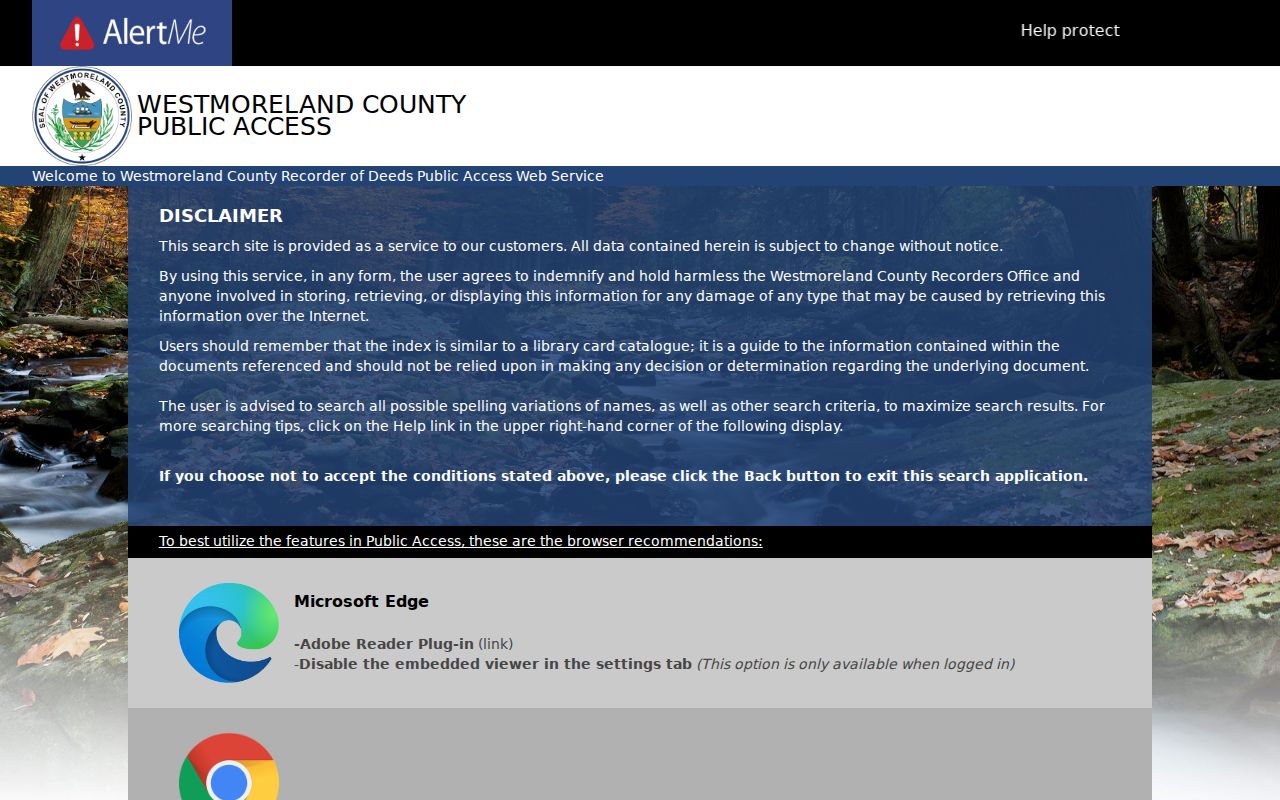
Its disclaimer and account information are a reminder to preserve the document date and reference, then read the underlying land record rather than relying on an index line alone.
Penn Township Previous Residents Before 1855
Penn Township was incorporated on February 23, 1855 from parts of Hempfield, North Huntingdon, and Franklin Townships. That makes predecessor names essential when tracing past residents before the current Township label existed. Westmoreland County historical material reaches back to 1773, Register of Wills estate material begins at 1773, and Orphans’ Court material is described from 1750. Those ranges are a records geography lesson: an older transaction can be in the county’s history without being filed under modern Penn Township.
Township history also says original acreage later went to Penn Borough, Jeannette, Manor, and North Irwin. Current boundaries, postal labels, and Ward Map lines cannot be projected backward. Use a dated map beside each directory, deed, or estate record. County Map Maintenance advertises warrant, frontier, land-patent, farm, cemetery, highway, and rail maps, and its frontier mapping covers 1783 to 1825. Map context can locate a tract or road history, but it is not proof of a present boundary or association.
Penn Township Previous Residents Directory Pairing
Directories and census material add the person-and-place layer after the land trail is dated. The Greensburg Hempfield Area Library Pennsylvania Room reports printed Greensburg directories beginning in 1913 and intermittent runs from 1927 to 1992, microfilm directories from 1909 to 1959 with gaps, and later Greensburg or Latrobe print volumes from 2000 forward. It also reports census holdings for selected federal schedules and the 1950 release. A missing entry in an intermittent directory confirms only that the entry was not found in that volume. The Penn Township Directory Book keeps the collection and entry-reading details separate from this address-by-address trail.
- Choose the dated directory or telephone volume closest to the land-record transfer or address clue.
- Copy the name form, residence notation, locality, page or image reference, and every abbreviation exactly as printed.
- Check the closest census schedule and its location context, then compare the result with a map, deed, probate record, newspaper, or another dated directory.
- Move one interval earlier and later. Keep a timeline instead of merging same-name entries without corroboration.
The Pennsylvania Room’s genealogy page is shown below. Its appointment-based collections are a documented route for the directories, census reels, newspapers, church and cemetery material used to test an older Penn Township address clue.
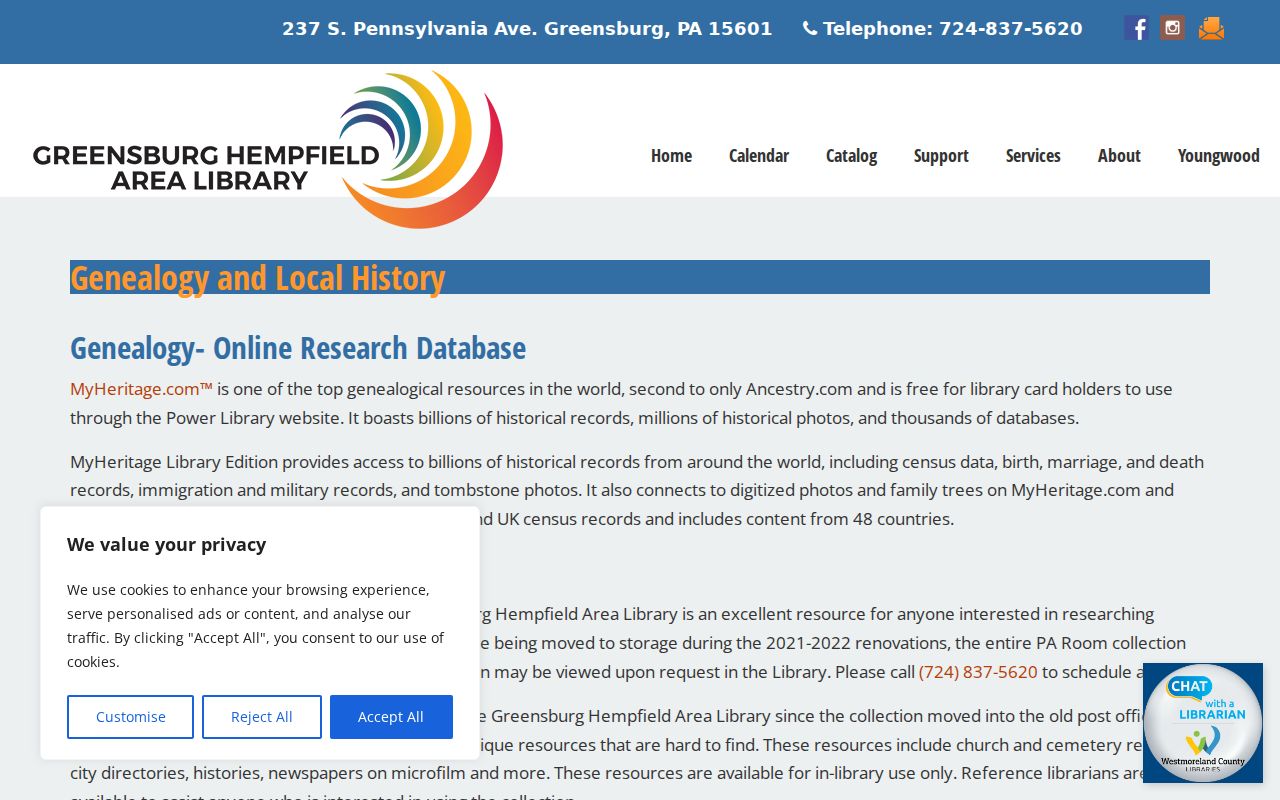
Use the source date and the volume’s key alongside the entry. A subscriber, taxpayer, or directory listing is not automatic proof of ownership, every person at an address, or a current connection.
Penn Township Previous Residents Library Sources
Several local repositories can fill a deed or directory gap. Penn Area Library is a local starting point with POWER Library access, but its public site does not publish a full historical finding aid. Ask staff about a specific surname, locality, date range, record type, or address variant. The Westmoreland County Historical Society’s Pollins Library reports more than 5,000 county-history and genealogy reference books, original documents, maps, and research support for the 1773 to present county boundary. Its special collections require an appointment and work best with a focused request.
The Penn Area Library research page below provides a local entry point for a defined question. It should be used to ask about current holdings, not as evidence that a particular historical record is online.
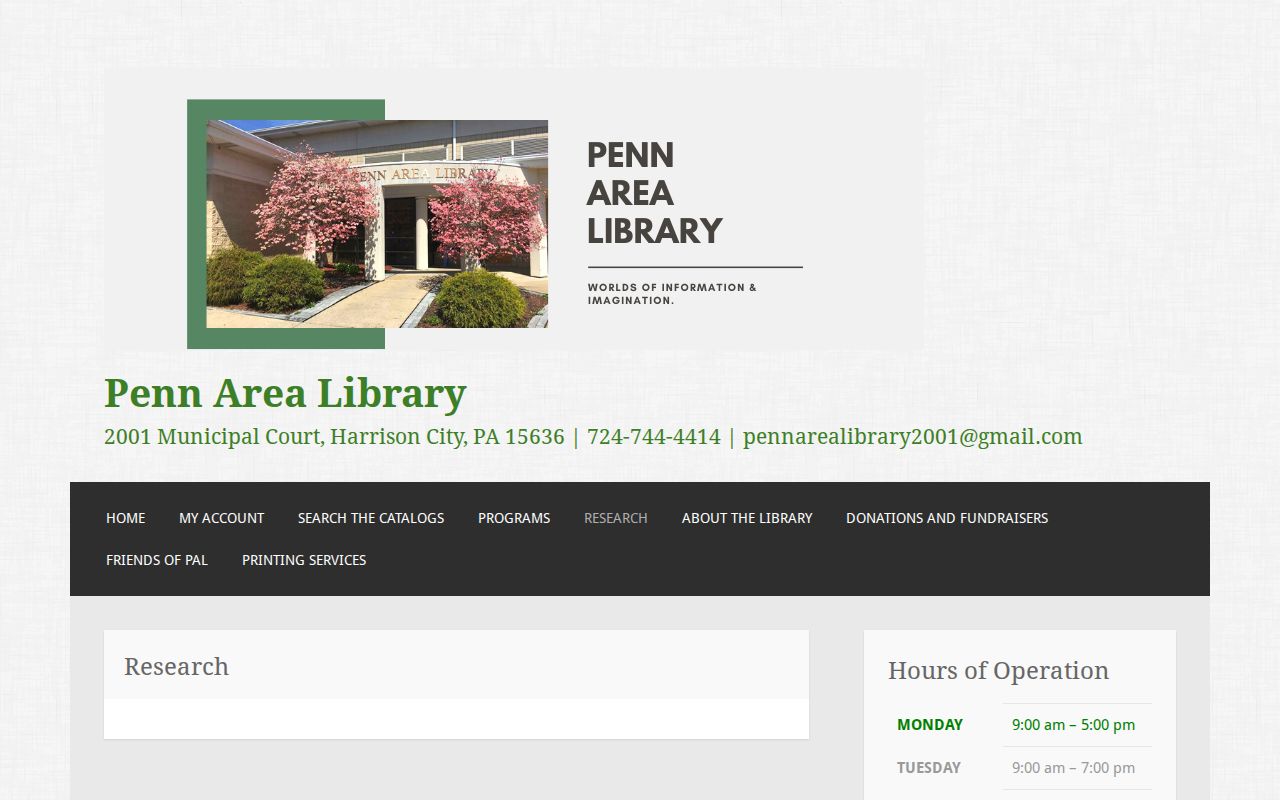
The Historical Society, Pennsylvania Room, and Penn Area Library supply different access routes. Appointment rules, research assistance, and copy charges vary, so contact the repository with the exact record series and date range before relying on a visit plan.
Penn Township Previous Residents Map Context
The digitized 1890-91 Wiggins directory adds a specialized Westmoreland clue. Its city material includes names, occupations, and residences, while its Township material provides taxpayer, post-office, and assessed-value context. It is not a complete Penn Township census. Use it beside County maps and recorded land records to test a period location, then look for corroboration in another dated source. An old assessed value should remain an old assessed value, not be treated as a present property statement.
The University of Pittsburgh Digital Collections record for Wiggins’ directory is pictured below. It is the verified catalog route for the 455-page 1890-91 publication.
Telephone volumes can provide another date layer. The Library of Congress holds digitized 1952 to 1960 Irwin-area telephone directory volumes that include Harrison City material, but their abbreviations and service geography can cross municipal lines. Pair a road or locality label with a dated map and the GIS boundary check.
Penn Township Previous Residents Record Requests
No public Penn Township archive for historic permits, road records, municipal minutes, township tax duplicates, cemetery plats, or school records by year was located. When a defined local record may exist, ask the Township, County, library, or historical repository for that exact series. A useful request identifies the record type, address or parcel, date range, and whether inspection or copies are sought. It does not ask a custodian to investigate a person or create a report about past residents.
Penn Township’s Right-to-Know page names its request route, and Westmoreland’s Open Records Officer accepts mail, fax, email, and in-person requests. Under Pennsylvania’s Right-to-Know Law, agencies generally respond within five business days and can use a defined written extension. The Township RTKL page, County request page, and Office of Open Records fee schedule are the current routes for procedure and charges.
Penn Township Previous Residents Limits
Past residents research has clear limits. A tax owner, recorded party, tax-mail recipient, and person documented in a dated directory are separate facts. A missing entry can be caused by an offline record, a gap, a variant spelling, a protected record, or an address form that changed over time. Pennsylvania’s Address Confidentiality Program can place a substitute address on qualifying government records. Do not reconstruct any protected location from parcels, old directories, relatives, maps, or other sources.
For a suspected altered deed, lien, title notice, or payment demand, independently check the Recorder record and use verified official contact information. A records search is not an emergency service. Call 911 for an immediate threat.