
Finding Penn Township Residents
Penn Township, Westmoreland County, has no official master roster of everyone who lives there. The usable resident trail depends on the fact in hand. A street address starts with the county property search and GIS boundary layer. A recorded transfer starts with the Recorder of Deeds. A dated household question belongs in a directory, telephone book, census, newspaper, or archive collection. A court or vital question has its own custodian. Each source is evidence for a limited purpose, and none converts a name alone into a reliable match.
Start narrowly. Record the municipality as Penn Township, not merely a postal city such as Harrison City or Irwin. Note the date of the record and the date being researched. A county tax owner, a recorded party, a mailing recipient, and a current occupant are four different facts. That distinction is especially important in Penn Township because its postal labels and municipal boundary do not always line up.
- Search the Westmoreland property record by address, owner name, or parcel number.
- Use County GIS to confirm the parcel is inside Penn Township and save the displayed address and map date.
- Open the Recorder index for the relevant party or parcel clues, then read the actual instrument.
- Use the Pennsylvania Room or Historical Society for a dated household question.
- Ask the owning office for a defined existing record when the needed material is not online.
Penn Township Records Offices
County and state custodians hold most Penn Township resident records. The Recorder indexes recorded land documents. Tax Assessment supplies a dated parcel and tax trail. The Register of Wills holds estate, marriage, and older local vital material. The Election Bureau administers election records, while Pennsylvania’s online voter service is a self-status tool. Penn Township itself is the route for defined municipal files such as permits, zoning, and RTKL requests, not a general people database.
Westmoreland Recorder
40 N. Pennsylvania Ave., Suite 420
Greensburg, PA
724-830-3518
For a whole-street record trail, the Penn Township street directory keeps the focus on parcels, deeds, and address evidence. Its process is different from a one-person search.
Penn Township Parcel Records
The Westmoreland Real Property Search is the practical first stop for a Penn Township address. The County documents parcel-number, name, and location routes. A location query is not entered exactly as it appears on a mailbox: the County instructs searchers to leave out directional prefixes, suffixes, and the street designator. Combine an owner-name query with an address when a common surname returns too much. Then use the County GIS public map to confirm the parcel and municipal boundary before treating a result as Penn Township evidence.
| Property search field | How it works | Penn Township use |
|---|---|---|
| Parcel number | Enter the County number exactly | Connects tax, GIS, and deed research |
| Owner name | Full or partial last name, no commas or periods | Finds a dated tax-owner entry |
| Location | Use the street core without direction or designator | Starts an address-based parcel search |
| GIS parcel search | Select a parcel, then use identify and layers | Checks map location and municipality |
The tax duplicate refreshes in late January and late June. That makes it useful, but not a live title feed. Pair a time-sensitive property statement with the recorded document at the Recorder.
County GIS is the location check between the tax entry and the deed. Its public map provides parcel geometry, aerial context, municipal selection, and tools such as Layers, Identify, Measure, and Print. Linked property or ownership cards reached through GIS are subscription access, while the map layers themselves are free. Keep the map date with the result. An owner label, an aerial image, or a nearby road does not establish the legal boundary of a Penn Township address without the municipal layer.
For a historical road or tract question, the County’s Map Maintenance resources include warrant, frontier, land-patent, farm, cemetery, highway, rail, and other historic-map material. Those maps give period context. They should be compared with a dated deed and current parcel map, not used alone as a modern title or residence record.
Penn Township Deed Records
The County says its online deed index reaches 1850. Search the Westmoreland Recorder Public Access system with party-name variants and the parcel clues found in the property record. The Recorder cautions that an index is a catalog, so a match should lead to the document image or an official copy, not to a claim based only on the index line. Save the instrument type, recording date, document or book-and-page reference, grantor, grantee, and legal-description clues.
The Recorder entry screen shown here is the front door for that document trail. It does not establish a present household by itself.
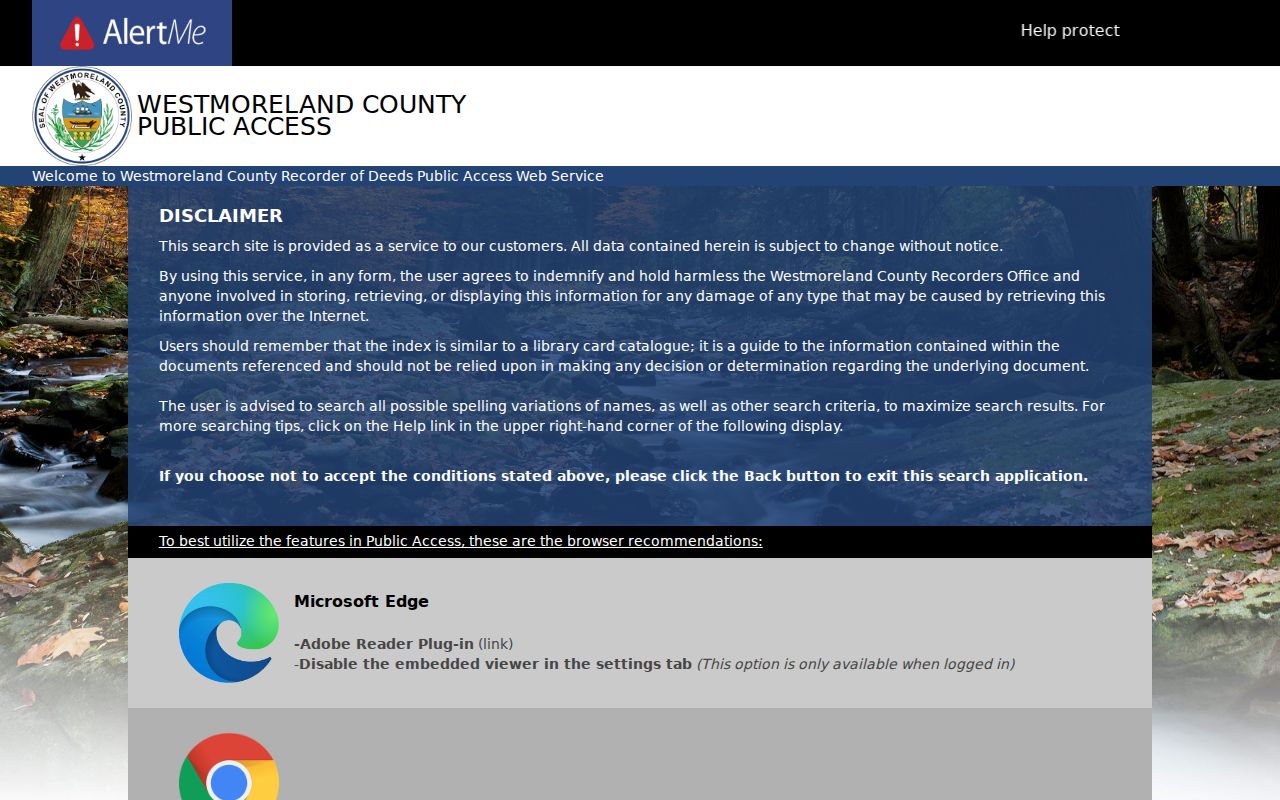
A careful Penn Township records search follows the instrument backward or forward one link at a time. Releases, easements, plans, estate transfers, and corrective documents can change how a parcel history reads.
Note: Confirm current Recorder research-center access before a visit because the published 2025 notice described a budget-related closure condition.
Penn Township Directory Terms
Short labels can hide important limits. Use the source’s own date and field names when noting a Penn Township result, and do not turn a land or archive index into an account of everyone at an address.
- Parcel
- A land-record key that connects a map, tax entry, and deed research. It is not a resident identifier.
- Index
- A catalog of records. It helps find a document but may not contain all of the document’s context.
- Roll
- A list maintained for a specific public purpose, such as assessment or election administration.
- Criss-cross directory
- A dated directory arranged by address or street when a volume includes that section.
Penn Township Resident Directories
Current Penn Township directory evidence is scattered by purpose. The County tax duplicate can name the current assessed owner of a parcel. The Recorder identifies parties to an instrument. Pennsylvania’s voter-status page lets an individual check registration status, while a street or public voter list follows a separate statutory request process. These sources should not be merged into a resident profile, copied into a list, or treated as proof of every person in a home.
| Record route | What it may confirm | Custodian | Access limit |
|---|---|---|---|
| Property tax duplicate | Dated tax owner and parcel | Westmoreland Tax Assessment | Public search, refreshed twice yearly |
| Recorded document index | Party to a deed or related instrument | Recorder of Deeds | Index needs document review |
| Voter status | An individual’s registration-status route | Pennsylvania election service | Not a street browse |
| Historical directory | Dated name and address clue | Pennsylvania Room or archive | Not a current-residence claim |
Free GIS layers place a parcel and provide aerial or boundary context, while linked ownership cards are subscription access. That difference matters when deciding whether a portal result is enough or an office or document request is needed.
Penn Township Voter Records
Pennsylvania treats voter material as regulated election information. The official voter-registration status service is for an individual’s status, with telephone and county-office fallbacks. It is not a Penn Township street directory. The statutory voter-list form offers public, street, walking, and full-list formats subject to its certification and use restrictions. The form describes an electronic list fee category, but its live terms and fields should be checked before a request.
The official voter-status screen below is useful because it shows the individual-service route, not because it creates a public roster.
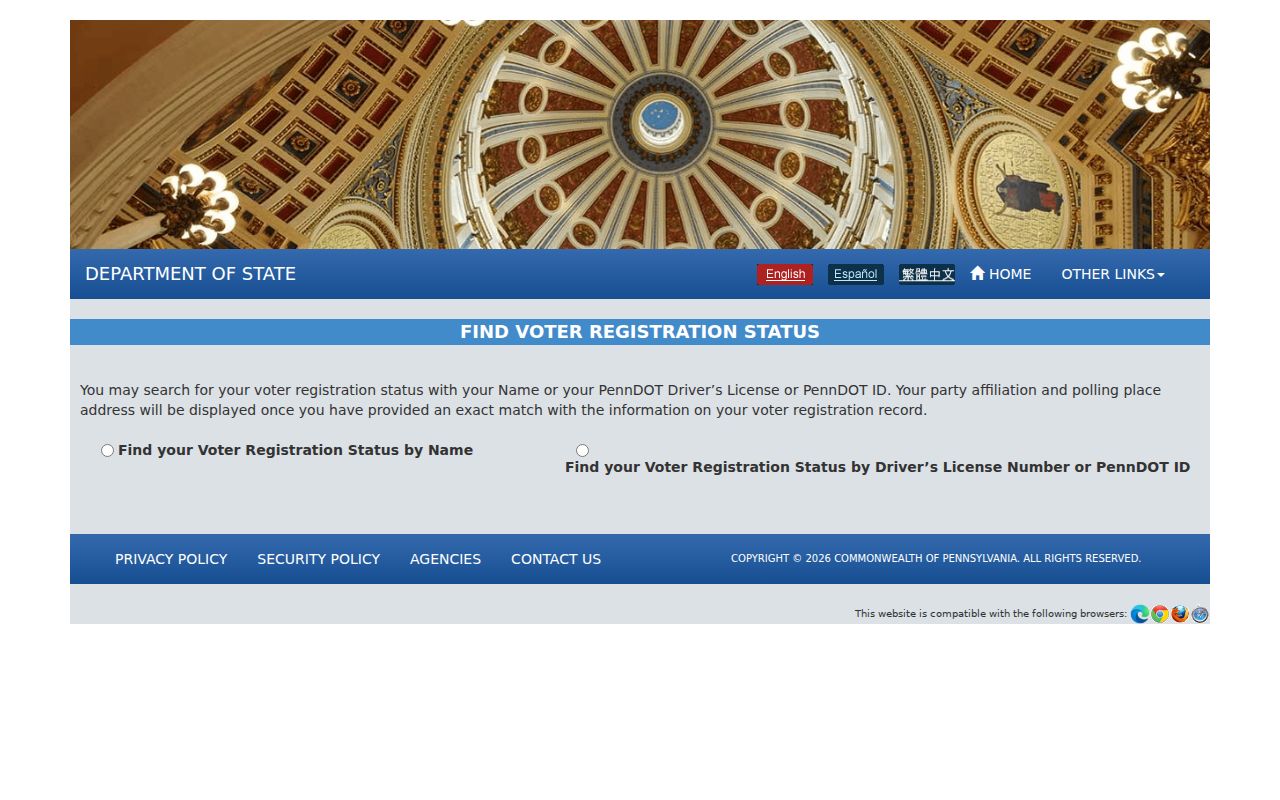
Penn Township’s ward map and the Westmoreland Election Bureau help with precinct context. A ZIP, ward, or polling place never proves a person’s residence. Pennsylvania’s Address Confidentiality Program also allows eligible participants to use a substitute address in specified government records, including voter registration.
Penn Township Court Records
Court and custody records have separate systems. Pennsylvania UJS Case Search is the statewide route for public appellate, Common Pleas criminal, and magisterial docket information. Select Westmoreland County when that is the jurisdiction in question, then use a party name, docket, date range, or other ordinary field carefully. Westmoreland iJEMS is distinct and covers civil and family dockets; its public search has docket access but no images. Contact the Prothonotary or court custodian for a paper or restricted record.
The UJS Case Search form includes Westmoreland selection and participant fields. Its notices also explain why a missing result is not proof that no record ever existed.
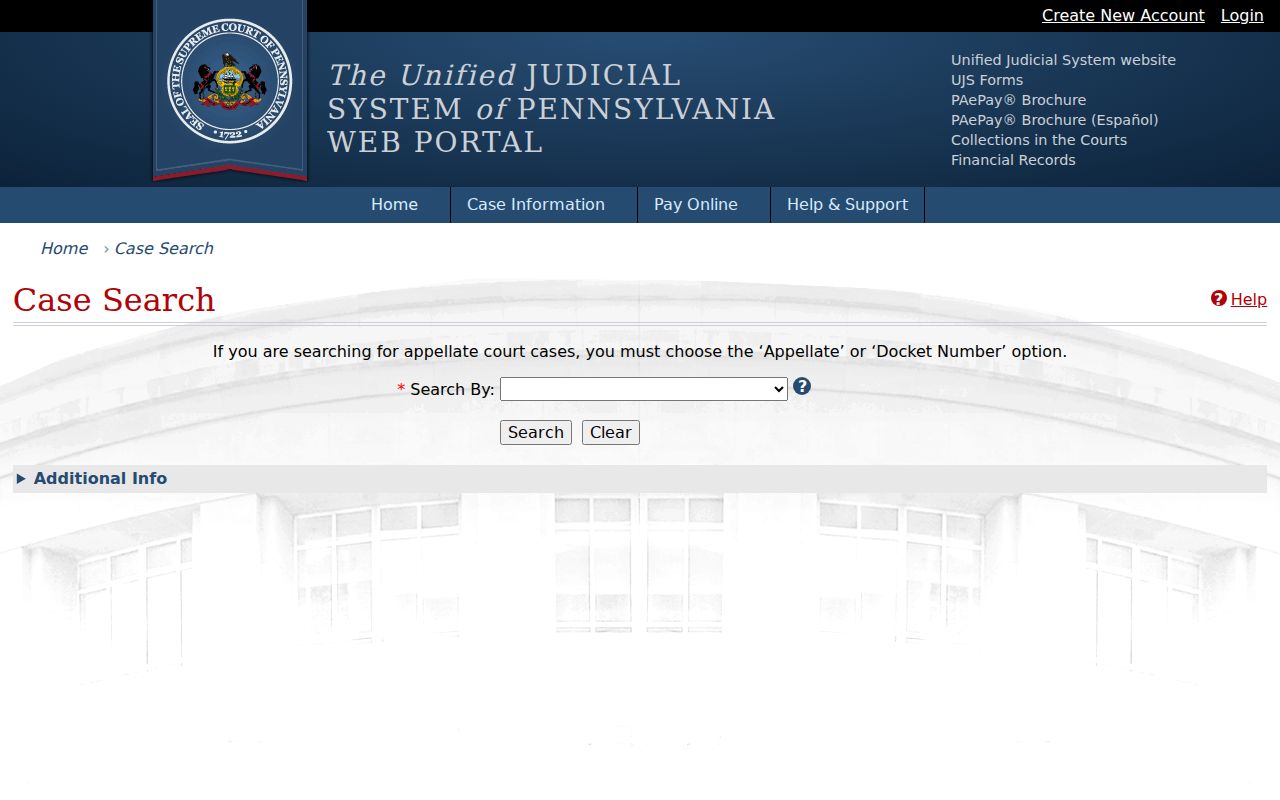
Eligible docket material can still be delayed, expunged, limited access, juvenile, or otherwise unavailable online. Match a court result by docket, court, date, and status. A filing, complaint, or booking is not a final outcome.
The Pennsylvania DOC locator is a different state-supervision system. It does not replace the County prison roster or a court docket.
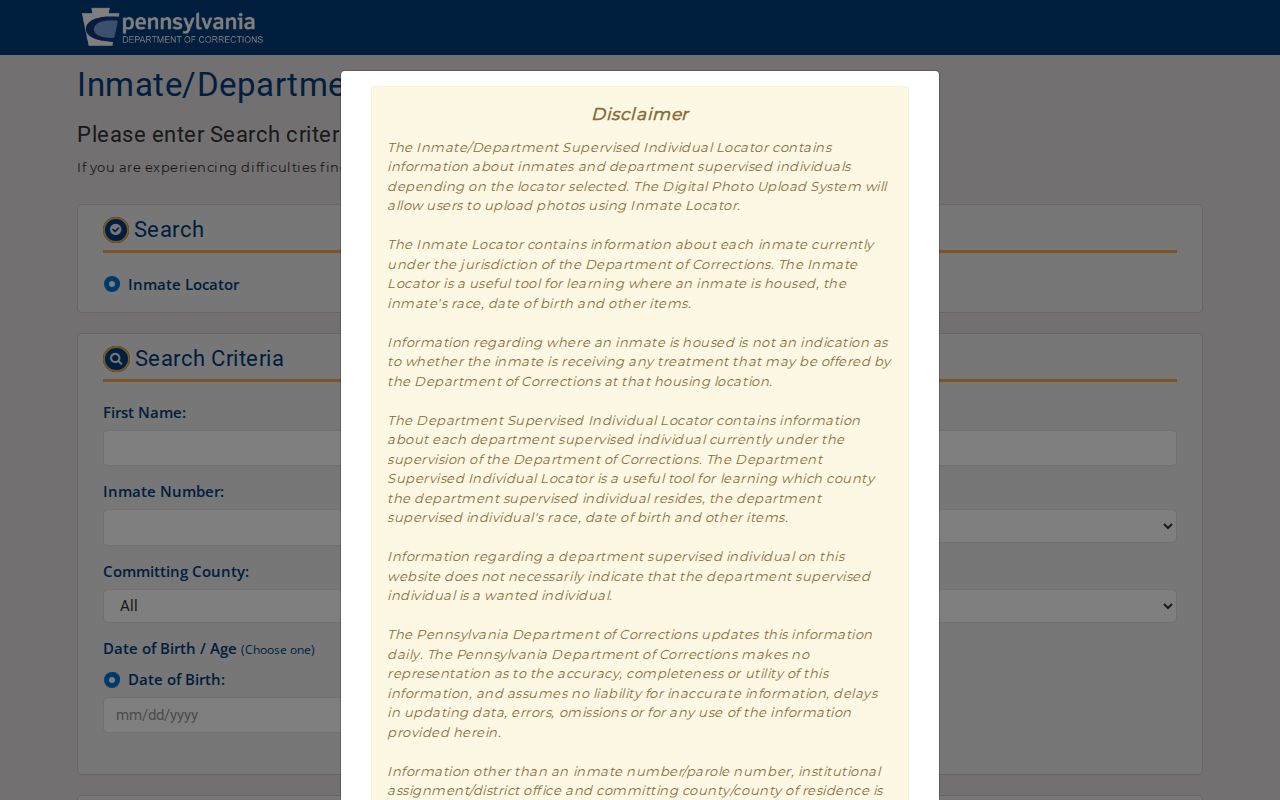
State locator information changes daily, and county custody is separate. Never republish or use a safety-system result to harass, threaten, or locate a protected person.
Penn Township Historical Directories
Historical Penn Township resident records are most useful when their dates stay attached. The Greensburg Hempfield Area Library Pennsylvania Room holds directories, newspapers, census reels, church and cemetery material, and an early wills index by appointment. Its reported directory holdings include microfilm from 1909 through 1959 with gaps, printed Greensburg runs from 1913 and intermittently from 1927 through 1992, plus later Greensburg and Latrobe volumes. Wiggins’ 1890-91 directory and Irwin-area telephone volumes add other dated clues.
A directory entry may preserve a name, address, locality, occupation, or subscriber notation as printed. It does not prove a present address, ownership, or every member of a household. The Penn Township Directory Book gives the collection-specific trail, including how to pair a directory year with a census, map, deed, or obituary source.
Penn Township Predecessor Records
Penn Township was incorporated on February 23, 1855 from parts of Hempfield, North Huntingdon, and Franklin Townships. Before that date, a family, land, road, or probate question may be indexed under a predecessor place rather than Penn Township. Westmoreland County history and estate material reach much further back, and the Register of Wills describes estates from 1773 with broader Orphans’ Court material from 1750. The Township became first class on January 1, 1958 after a 1957 vote, a later fact that should not be projected backward.
That local history is a useful check on a no-result. Search the period locality, compare an old map with the current municipal boundary, and preserve the place name exactly as the historical source prints it. Parts of the original Township later went to Penn Borough, Jeannette, Manor, and North Irwin.
Note: A current Penn Township boundary is a modern map tool, not evidence that an earlier record used the same jurisdiction name.
Penn Township Records Requests
When a named portal has no answer, ask for a specific existing Penn Township or Westmoreland record. The Pennsylvania Right-to-Know Law, 65 P.S. §§67.101-67.3104, generally requires a response in five business days, with a written extension available in some cases. A good request identifies the record type, address, parcel, docket, or date range and asks for inspection or a stated copy format. It does not ask an agency to investigate a person, identify occupants, or create a new report.
The Westmoreland open-records page provides email, mail, fax, and in-person routes through its Open Records Officer. Penn Township lists Mary Perez as its General Right-to-Know Officer. The State Office of Open Records fee schedule says electronic transmission normally has no added charge and gives the current rules for copies, certification, redaction, and prepayment.
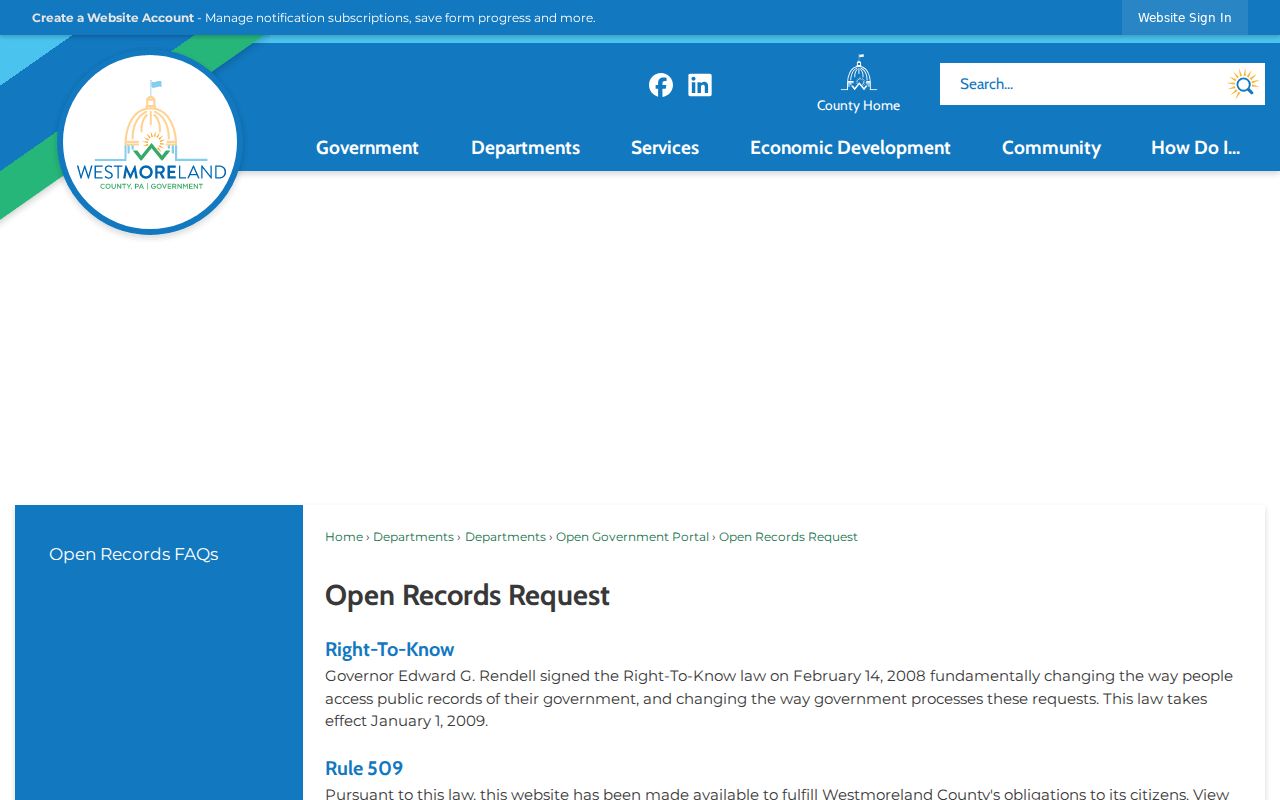
This County request page illustrates the official request channel, which is separate from the County’s searchable indexes.
For a local permit, zoning, code, road, or meeting record, start with Penn Township Community Development at 724-744-2171 and provide an address and date range. No public Township permit-results search was located.
Westmoreland’s Open Records Officer is listed at 2 N. Main Street, Suite 103, Greensburg, PA 15601, with email, fax, mail, and in-person channels on the County form. The state fee structure permits ordinary copying and certification charges under its current schedule, while electronic transmission normally has no added charge and agencies may not bill for search, retrieval, or review. Check the live form and schedule before sending a request because specialized fees and access instructions can change.
Penn Township Record Privacy
Public access has limits. Vital certificates have their own age windows and custodian rules. Court dockets can omit protected material. The state voter-list form controls request and publication conditions. An Address Confidentiality Program participant may have a substitute address in qualifying public records. A withheld address, sealed record, or redacted field must remain that way; do not reconstruct it through relatives, old maps, or other sources.
Lawful use. Use Penn Township records for a defined, lawful question. Do not use any record or directory trail to stalk, harass, intimidate, threaten, or harm another person.
For a suspected altered deed or payment demand, verify the document directly with the Recorder and use independent contact information. The Pennsylvania Attorney General issued a February 2026 warning about property-ownership scams. An alert service may help flag activity, but it is not proof of title or a substitute for document review.
Penn Township Records Check
Keep a short source log for every Penn Township resident search: the portal or repository, search term, source date, record date, document or docket number, municipality check, and unresolved question. That small habit prevents most same-name and boundary errors. It also makes it clear when an answer belongs with the Recorder, Register of Wills, Prothonotary, Election Bureau, Township office, library, archive, or another custodian.
Access conditions last checked: August 2026. Property, GIS, deed, court, custody, permit, archive, vital, and election systems remain separately administered. Use the live source for current hours, fees, availability, and form fields.